
|
Recent Articles
| Image | Title & Summary |
|---|---|

|
Pilot says he woke up in downtown Denver hotel to find bat in his room and bite on his foot
The alleged bat encounter now makes it difficult for the pilot to sleep in hotels, his attorney says Removed from bookmarks A commercial pilot is suing a downtown Denver hotel after a bat allegedly sunk its teeth into his foot, leaving him with a bite he claims cost him more than $100,000 in medical bills. The alleged August 2025 incident happened while the pilot was staying on the 22nd floor of the Sheraton Denver Hotel Downtown. The pilot, who has not been publicly identified because he fears professional repercussions, alleges he was awakened in the middle of the night by bats flying through his room, CBS Colorado reports. “[He] was sleeping and he woke up to a commotion, and he woke up a… |

|
Trump and US officials targeted by accused shooter
WASHINGTON — Federal authorities are investigating what they describe as a targeted attack near the White House Correspondents’ Association dinner after a man opened fire Saturday evening outside the secured perimeter of the event, prompting a rapid response from Secret Service agents and other law enforcement. Acting Attorney General Todd Blanche said Sunday that investigators believe the suspect intended to target President Donald Trump and members of his administration who were attending the annual dinner, one of Washington’s highest-profile political gatherings. According to Blanche, the suspect traveled from California to Washington, D.C., by train, passing through Chicago along the way… |

|
Stock markets surge as Trump calls off strikes on Iran
Stock markets have surged following US President Donald Trump’s announcement that he called off planned strikes against Iran and a peace deal with Tehran is imminent. Wall Street’s benchmark S&P500 index finished nearly 1.8 percent higher on Thursday, ending a three-day streak of losses for the biggest single-day gain since April. The tech-focused Nasdaq Composite jumped 2.5 percent, while the older, blue-chip Dow Jones Industrial Average gained about 1.9 percent. The rally continued in the Asia Pacific on Friday, with markets in Japan, South Korea, Taiwan, Hong Kong, and Australia racking up gains. South Korea’s Kospi, the best-performing major index this year, surged more than 8 percent in… |

|
The New Face of American Power
Opinion | Editorial America’s Doctrine of Power in 2026 The opening week of 2026 has stripped away any lingering illusions about the trajectory of U.S. foreign policy. In Caracas, a military raid removed Venezuelan President Nicolás Maduro from power. Days later, Washington floated the possibility of acquiring Greenland by force. These are not isolated provocations. They clearly show a belief that control over land can be bargained for, valuable resources are seen as rewards, and military power is used as a way to gain economic advantage. Venezuela: Justice or Oil? Officials framed the Caracas operation as a crackdown on corruption and narcotics trafficking. Maduro and his wife were flown to… |

|
How Google Is Attempting to Silence Independent News Sites
Part I: The Silent Wall The internet was supposed to be the great equalizer. It promised that anyone with conviction and a keyboard could publish, and the world could read. For a time, that promise felt real. Independent voices flourished, blogs became movements, and small publishers carved out spaces where truth could breathe. But today, that promise is collapsing. Small publishers are running headlong into a wall they cannot see. This wall is not built of stone or law. It is built of code. Invisible filters decide what is “safe,” what is “indexable,” what is “fetchable.” And when those filters misfire—or when they are designed to favor the giants—small publishers vanish. Consider the lived… |

|
Is A Human Journey To Mars Feasible
For more than half a century, Mars has functioned less as a destination than as a promise. It is the place we gesture toward when Earth feels politically exhausted, environmentally strained, or philosophically cramped. Mars is invoked when budgets swell, when rockets roar, when speeches reach for grandeur. It has become the cosmic equivalent of a clean slate, a second chapter written in rust-red dust. But promises are easy to make when they sit 225 million kilometers away. The idea of sending humans to Mars has migrated from science fiction to press release to business plan, and now to something like cultural assumption. The question is no longer “Should we?” but “When?” That shift alone sho… |
|
We Built Systems to Avoid Responsibility and Now They Are Failing Us
Halenews Editorial A HaleNews feature editorial on responsibility, governance, and the cost of delay. For much of modern history, progress has been treated as a natural force—something that happens automatically as time passes, technology improves, and societies mature. This assumption is comforting, but it is also false. Progress has never been inevitable. It has always been the result of deliberate choices made under pressure, often against the interests of those who benefited from delay. What distinguishes the current moment is not the presence of crisis, but the convergence of crises that all demand the same thing: responsibility exercised before catastrophe makes it unavoidable. Climate… |

|
Trump says if Iran does not open the Strait of Hormuz within 48 hours he would destroy their power plants
On Saturday night, Trump warned Iran in a Truth Social post that the United States will attack Iran's power reactors if the Strait of Hormuz stays blocked. "The United States of America will hit and destroy their various power plants, starting with the biggest one first!" Trump warned in the post if Iran does not fully open the Strait of Hormuz without threat within 48 hours from now. The Strait of Hormuz is an important trading route that carries around 20% of the world's oil. Oil prices have skyrocketed worldwide as a result of Iranian strikes on ships in the region, which has effectively cut off maritime activity in the area. The Trump administration has made yet another effort to rein do… |

|
Teen girl dies in sledding accident
Two teenagers died in separate winter recreation accidents hundreds of miles apart, leaving their communities reckoning with sudden loss during rare snowstorms. As vigils replace snow days, schools, families, and officials confront how quickly ordinary moments can turn fatal when unfamiliar conditions meet youthful risk. In Frisco, Texas, the first signs that something was wrong came not from police lights but from silence. On a street that had been filled hours earlier with teenagers sledding and laughing in freshly fallen snow, neighbors watched emergency responders gather near a tree at the edge of a residential road. By Sunday evening, word began to spread that a 16-year-old girl had die… |

|
The Needless Murder of Over 150 Girls in Minab Iran
We remember the small rituals that made the day feel ordinary, because ordinary is what a school is supposed to be. A braid tightened with quick fingers. A scarf adjusted in a hallway mirror. The paper smell inside a notebook when you open it too fast. The soft ache of a backpack strap on a shoulder that’s still growing. We remember the way our teachers tried to make us brave about quizzes, the way we pretended not to care and then cared anyway. We remember laughter spilling down a corridor like marbles—impossible to gather once it’s loose. We walked into Shajareh Tayyebeh believing, with the stubborn faith children are allowed to have, that a classroom is a kind of sanctuary. Not holy, not … |

|
Nvidia CEO Huang denies he is unhappy with OpenAI says 'huge' investment planned
Business TAIPEI, Jan 31 : Nvidia plans to make a "huge" investment into OpenAI, probably its largest ever, CEO Jensen Huang said on Saturday, denying he was unhappy with the ChatGPT maker. The chipmaker in September announced plans to invest up to $100 billion in OpenAI, a deal that would give OpenAI the cash and access it needs to buy advanced chips that are key to maintaining its dominance in an increasingly competitive landscape. The Wall Street Journal reported on Friday that the plan had stalled after some inside the chip giant expressed doubts about the deal. The report said Huang had privately underlined to industry associates in recent months that the original $100 billion agreement … |

|
Kristi Noem and the politics of cruelty
Kristi Noem’s defense of the ICE agent who killed Renee Nicole Good has ignited one of the most explosive political firestorms of her career. Her remarks—branding Good a “domestic terrorist” and standing behind a podium emblazoned with a Nazi-era slogan—have drawn condemnation from lawmakers, activists, and ordinary citizens who see her as emblematic of authoritarian excess. The controversy is not a passing headline; it is a defining moment that reveals the deeper instincts of a politician who has built her career on toughness, loyalty, and spectacle, but who now finds herself accused of weaponizing cruelty into policy. The reaction to her stance has been visceral because it touches a raw ne… |
|
California named the most air polluted state in US
The 27th annual “State of the Air” study revealed that almost half of kids in the US are exposed to harmful levels of air pollution. That includes 7 million youngsters in California, and more than eight in 10 individuals live in counties with bad air. The research rated the air quality of counties with data from 2022 to 2024 on ground-level ozone pollution, popularly known as smog, and particle pollution, generally known as soot. Los Angeles-Long Beach was once again the most ozone-polluted metropolis in the nation. Bakersfield was the most contaminated for yearly particle pollution, although the area continued to improve in 2026 report. Ground-level ozone pollution, or smog, is a potent res… |

|
UFC fighting cage rises on White House lawn for US and Trump celebrations
Yet another White House construction project is under way in the United States, though this one is meant to be only temporary. Crews are erecting an octagon-shaped cage on the South Lawn that will host next month’s Ultimate Fighting Championship (UFC) bout, marking the nation’s 250th anniversary and President Donald Trump’s 80th birthday. Online renderings depict what the completed, wire-mesh-fence-ringed fight space is expected to look like before the June 14 event. It will be ringed by a red, white and blue stage under a towering arch featuring stars-and-stripes patterns and two large screens showing the action live. The cage and stage will themselves be surrounded by thousands of temporar… |
|
Kansas town is getting an underground nuclear reactor and splits the townspeople
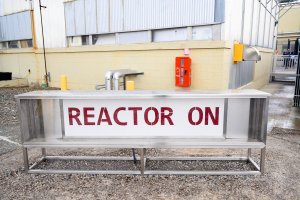
The so-called Gravity Reactor is being proposed by a California-based start-up company from a father-daughter duo, Liz Muller and Richard Muller Removed from bookmarks A pilot project to bury a nuclear reactor one mile underneath a town in Kansas has split the opinion of local residents, with some fearing the environmental impacts while others hope it will create economic opportunities. The so-called Gravity Reactor is being proposed by Deep Fission, a California-based start-up from a father-daughter duo, Liz Muller and Richard Muller, emeritus professor of physics at University of California, and an inventor. It will be the first time a commercial nuclear reactor operates underground. The s… |

|
Humanity Has Gone Over the Edge
Halenews Editorial Humanity has just gone over the edge of a cliff, and there may be no way back. Picture eight billion people in free fall and you begin to grasp the scale of what is now in motion. The only reason this does not feel urgent is because the catastrophe has not yet interrupted daily life. Nuclear war is no longer a distant Cold War nightmare. Reckless politics, fragile alliances, and leaders who talk about force the way bored men talk about dares have made it real again. If this goes wrong—and it can—the lights do not flicker. They go out. Satellites die. GPS disappears. Phones become paperweights. Banks freeze. Hospitals improvise. The internet, games, streaming, and social li… |
|
Hegseth says more US forces arriving in Middle East as Iran war ramps up
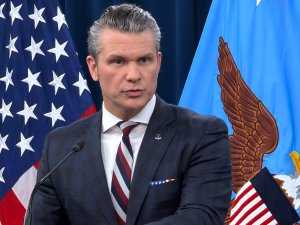
US Defense Secretary Pete Hegseth has said more United States forces are arriving in the Middle East, as the country’s war against Iran intensifies amid mounting concerns over the civilian toll of US-Israeli strikes. Hegseth said during a news conference at the Pentagon on Wednesday that the US-Israeli campaign against Iran was “just getting started”. “We are accelerating, not decelerating … More bombers and more fighters are arriving just today,” he told reporters, adding that the US would be using a “nearly unlimited” supply of 226kg (500lb), 453kg (1,000lb) and 900kg (2,000lb) bombs. The US and Israel, he said, would sow “death and destruction from the sky, all day long”. Hegseth’s combat… |

|
Legal Pricing Tricks Are Making Everyday Purchases More Deceptive Than Ever
Consumer Investigative The number on the shelf is not the number you pay, and somewhere along the way, everyone agreed to pretend that was normal. It starts small enough to feel like coincidence. A flight listed at one price becomes something else entirely after seat selection, baggage, and a fee that appears without explanation. A concert ticket doubles between the first click and the final screen. A meal arrives with a “service charge” that isn’t quite a tip and isn’t quite optional. Each moment is minor, explainable, defensible. Together, they form a system that depends on you being too tired to fight it. This is not chaos. It is design. Pricing used to be a statement. A tag meant somethi… |
|
AI Cameras Are Watching School Children
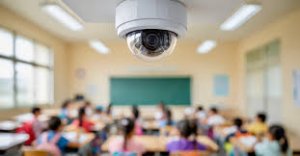
The camera in the corner of the classroom used to be a rumor, something whispered about after a substitute teacher mentioned “district policy” and nobody quite believed it. Now it’s not just real—it’s multiplying, quietly, efficiently, and with almost no resistance. Across the United States, school districts are installing AI-powered surveillance systems that track student behavior, monitor facial expressions, flag “suspicious” movement, and in some cases analyze tone of voice or written language. The stated goal is always the same: safety. Prevent violence. Identify threats early. Protect children. And here’s the uncomfortable truth: it sounds reasonable. That’s exactly why it’s dangerous. … |
|
Democrats fear rising that too many candidates in governor race could lead to a Republican victory
SAN FRANCISCO — Leaders of the California Democratic Party, along with liberal activists and loyal power brokers, are openly expressing fear that their crowded field of candidates running for governor may splinter the vote and open the door to a surprise Republican victory in November. Because of those concerns, the Democrats lagging at the bottom of the pack are being urged to drop out of the race to ensure that the party’s political dominance in statewide elections survives the 2026 election. “California Democrats are prepared to do what’s required,” state party chairman Rusty Hicks told reporters at the California Democratic Party’s annual convention on Friday. “We are ready and willing a… |