
|
Recent Articles
| Image | Title & Summary |
|---|---|

|
Kansas town is getting an underground nuclear reactor and splits the townspeople
The so-called Gravity Reactor is being proposed by a California-based start-up company from a father-daughter duo, Liz Muller and Richard Muller Removed from bookmarks A pilot project to bury a nuclear reactor one mile underneath a town in Kansas has split the opinion of local residents, with some fearing the environmental impacts while others hope it will create economic opportunities. The so-called Gravity Reactor is being proposed by Deep Fission, a California-based start-up from a father-daughter duo, Liz Muller and Richard Muller, emeritus professor of physics at University of California, and an inventor. It will be the first time a commercial nuclear reactor operates underground. The s… |

|
Mad as Hell and Tired of Dictators
Letter to the Editor Title: Mad as Hell and Tired of Dictators Author Tim Crestin Look, I ain’t no professor. I’m just a guy who works with his hands. Welding torch, pizza boxes, grocery aisles—you name it, I’ve done it. I’m scrappin’ pennies for journalism school ’cause I still believe words matter. But lemme tell ya, right now I feel like I belong on another planet. This one? It’s busted. Here’s the truth nobody wants to spit out: there’s always gonna be some two-bit wannabe dictator struttin’ around, puffin’ his chest, promisin’ he’s gonna fix everything. That ain’t the shock. The shock is how many nitwits line up to vote for him. The “big man” lovers, the angry mugs, the ones who think s… |

|
Jordan Jones shot dead
Local police reported that a security officer at a Georgia club was shot and murdered while trying to break up a quarrel between a guy and a woman. The Acworth Police Department reported in a news statement that Jordan Alexander Jones, 28, of Lawrenceville, Ga., was shot and killed approximately 2:42 a.m. local time while trying to break up the altercation. According to the news release, when APD officers got to the site, they "found a victim with a gunshot wound." "As soon as they got there, officers started helping until Cobb County Fire and Metro EMS arrived. The APD said, "The victim was taken to Kennestone Hospital, where he later died from his injuries." The police agency stated it got… |

|
Children Kidnapped is The Everyday Horror We Pretend Is not Happening
Opinion | Editorial The words “Children Kidnapped!” should stop us cold. They should rip through the noise of daily life, louder than any headline about markets or elections. Yet somehow, they don’t. We scroll past them, we shake our heads, we mutter “how awful,” and then we move on. That is the scandal. Society has learned to absorb the shock of child abductions as if it were routine. The recent case of a school bus driver accused of kidnapping after allegedly veering off his route is not an isolated nightmare. It is a symptom of a deeper rot. Parents put their children on buses every morning, believing in the ritual of safety. Signs such as yellow paint, stop signs, and uniforms serve as r… |

|
Danger Lurks In The Bedroom
Danger lingers as a senior couple lie together in an overly warm bedroom. The air does not feel oppressive, only still, the kind of warmth that settles into fabric and skin without protest. He sleeps lightly now, age having thinned the distance between rest and vigilance. She sleeps deeper — until she does not. Her seizures arrive only at night. Grand mal, sudden, violent, disorienting in their aftermath. Daytime offers no clues. Medication remains stable. Diet unchanged. Tests return the quiet ambiguity medicine often delivers: nothing obvious, nothing solved. What remains is pattern. Always sleep. Always night. He has begun noticing the temperature. Seventy-eight degrees. Comfortable, peop… |
|
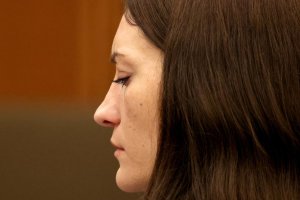
Lindsay Clancy breaks down in tears when the 911 call of her husband She killed the kids is played
Over the course of several interviews, Patrick Clancy has expressed his willingness to forgive his ex-wife, whom he considers to be unwell rather than malevolent. On Wednesday, Lindsay Clancy broke down in tears in court as the jury listened to the approximately seven-minute 911 call that her husband made after returning to an unusually quiet home, only to discover that she had strangled their three children. According to the prosecution, she had asked Patrick Clancy to make a quick trip to a pharmacy to pick up some prescription and take out some food. However, the prosecution claims that this request was nothing more than a pretext to get him out of the house. During the time that the jury… |
|
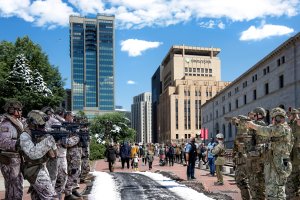
Crossing Trump and his Insurrection in Minnesota
Editorial Minnesota is standing on a line most people pretend doesn’t exist until it’s under their feet. The killing of Renée Good didn’t just spark protests. It tore open a fracture that’s been widening for years, one where federal power shows up without consent, accountability drifts upward into silence, and states are left holding the consequences. The question now isn’t whether order returns. It’s who gets to impose it, who they answer to, and which law they plan to hide behind when it goes wrong. That law has a name, and it’s older than most Americans realize. The Insurrection Act of 1807 sits on the books like a quiet threat, rarely mentioned, almost never explained, waiting for the mo… |

|
US and Israel bomb Iran with talks and threats leading up to attacks
The United States and Israel have launched strikes on Iran despite ongoing talks between Washington and Tehran over Iran’s nuclear programme. Iran responded to Saturday’s attacks with missile and air strikes across the region, including in Israel, Bahrain, Saudi Arabia, Qatar, the United Arab Emirates and Iraq. Israeli officials said their strikes targeted Iran’s military and nuclear-related infrastructure, while airspace across Israel was closed and emergency measures imposed. Several other countries in the region also announced the closure of their airspace. Meanwhile, President Donald Trump said Washington has begun a “major combat operation” in Iran, aimed at “eliminating threats from th… |

|
Stanford Godmother of AI Launches Spatial Intelligence MasterClass
MasterClass, the personalized learning platform, has announced the launch of Dr. Fei-Fei Li: AI’s Future – and Yours, a class that covers the current state of AI development, its real-world applications and the role individuals can play in influencing how the technology evolves. Known as the “Godmother of AI,” Li is a Stanford professor, cofounder and CEO of World Labs and founding director of Stanford’s Human-Centered AI Institute. Her foundational research on ImageNet helped spark the deep learning revolution behind every AI product in use today. The class is available now on MasterClass, where members have unlimited access to 200+ instructors with an annual membership. The class begins wh… |

|
Rebecca Grossman murdered 2 boys when she sped through a crosswalk
This is read by an automated voice. Please report any issues or inconsistencies here. Rebecca Grossman murdered two young brothers when she sped through a Westlake Village crosswalk, a jury found two years ago. Now, a state appeals court has upheld that verdict. Grossman, the co-founder of the Grossman Burn Foundation, is serving 15 years to life in state prison for the second-degree murders of 11-year-old Mark Iskander and 8-year-old Jacob Iskander. On Tuesday, the California 2nd District Court of Appeal upheld the Feb. 23, 2024, conviction of the wife of renowned surgeon Peter Grossman. Rebecca Grossman’s six-week trial was filled with dramatic testimony and evidence that she struck the bo… |

|
Daughter and son-in-law charged with killing four family members in 2015
Shocking new charges have been brought in the case of a family that was brutally murdered in their homes on Halloween night in 2015. Cathy Scott, her husband Michael Scott, Mr Scott's mother, Barbara, and Ms Scott's mother, Violet Taylor, were murdered on Halloween night in 2015. Now, the couple’s daughter, Amy Vilardi, and her husband, Rosmore "Ross" Vilardi, have been arrested and charged in their deaths. Ms Vilardi and her husband were featured in tearful television interviews following the murders, but are now considered the prime suspects in the slayings, according to The Daily Beast. The four adults were found shot and killed in their homes in Pendleton, South Carolina, on 2 November 2… |

|
Humanity Has Gone Over the Edge
Halenews Editorial Humanity has just gone over the edge of a cliff, and there may be no way back. Picture eight billion people in free fall and you begin to grasp the scale of what is now in motion. The only reason this does not feel urgent is because the catastrophe has not yet interrupted daily life. Nuclear war is no longer a distant Cold War nightmare. Reckless politics, fragile alliances, and leaders who talk about force the way bored men talk about dares have made it real again. If this goes wrong—and it can—the lights do not flicker. They go out. Satellites die. GPS disappears. Phones become paperweights. Banks freeze. Hospitals improvise. The internet, games, streaming, and social li… |

|
Legal Pricing Tricks Are Making Everyday Purchases More Deceptive Than Ever
Consumer Investigative The number on the shelf is not the number you pay, and somewhere along the way, everyone agreed to pretend that was normal. It starts small enough to feel like coincidence. A flight listed at one price becomes something else entirely after seat selection, baggage, and a fee that appears without explanation. A concert ticket doubles between the first click and the final screen. A meal arrives with a “service charge” that isn’t quite a tip and isn’t quite optional. Each moment is minor, explainable, defensible. Together, they form a system that depends on you being too tired to fight it. This is not chaos. It is design. Pricing used to be a statement. A tag meant somethi… |

|
Abortion is When the State Claims Your Body
Editorial There is a particular cruelty to laws that pretend to be principled while operating as punishment. They arrive draped in solemn language—“life,” “values,” “tradition”—but what they deliver is not morality. It is power, exercised downward, toward the people least able to absorb it. When courts reinstate abortion bans, as they have again, they are not adjudicating an abstract ethical puzzle. They are making a decision about whose pain counts, whose future is disposable, and whose body the state is entitled to commandeer. Abortion is not a thought experiment. It is not a philosophy seminar. It is a medical reality that intersects with rape, poverty, disability, illness, coercion, and … |

|
Foreign element caused recall of 90000 bottles of child ibuprofen
Federal regulators have ordered a nationwide recall of nearly 90,000 bottles of children’s ibuprofen after contamination was discovered in two production lots. The medicine, manufactured by Strides Pharma and distributed by Taro Pharmaceuticals, was pulled from circulation following complaints of “gel-like masses and black particles” in the liquid suspension. The Food and Drug Administration confirmed the recall earlier this month, classifying it as a Class II event—meaning the risk of serious harm is considered remote, but temporary or reversible health effects are possible. Parents are being urged to stop using the affected bottles immediately, which carry expiration dates of January 31, 2… |
|
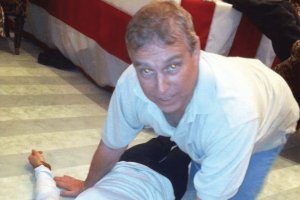
New Epstein file photos appear to show Andrew Mountbatten-Windsor on floor with woman
Photos included in newly released files on pedophile billionaire Jeffrey Epstein appear to show Andrew Mountbatten-Windsor crouched over a woman on the floor. In the undated images, the royal appears to kneel on the ground as he leans over an unidentified woman, while another angle shows the woman’s abdomen being touched. The images, among more than three million documents published by the US Department of Justice (DOJ) on Friday, have no captions and it is not known where they were taken. But they will likely put further pressure on Andrew, who has faced ongoing questions over his friendship with the late financier. The royal has always denied any wrongdoing. Other files revealed Andrew—str… |

|
From Seconds to Minutes As Fusion Energy Takes a Historic Step
Nearly unlimited fusion power on a global scale is the objective. It will be the highest achievement in human history. And it's moving ahead at a fast pacde. Humanity has always been defined by its relationship with fire. The first spark struck from stone gave us warmth, protection, and the power to cook food. Centuries later, coal and oil lit the furnaces of industry, driving trains, ships, and factories. But those fuels came with a cost: smoke in the skies, carbon in the air, and wars fought over pipelines and reserves. For decades, scientists dreamed of a different fire—the fire of the stars themselves. Fusion, the reaction that powers the sun, was the ultimate prize. If we could hold it,… |

|
What Delay Looks Like When You are Absorbing the Cost
Halenews Editorial Delay is often described as prudence. From a distance, waiting can look reasonable, even wise. But distance matters. When you live close to the edge, delay is not neutral time—it is pressure. For families already stretched thin, rising energy prices are not a debate about markets; they are a calculation about heat. Flooding is not an environmental statistic; it is a ruined home. Healthcare access is not a policy disagreement; it is a postponed diagnosis that becomes irreversible. Those most affected by delay rarely appear in policy discussions except as data points. Their lives are summarized, averaged, and footnoted. Meanwhile, decisions are postponed to avoid political r… |

|
AI companies accused of copyrighted infringement
Opinion | Editorial The open letter signed by Scarlett Johansson and hundreds of other creatives didn’t land because it was polite. It landed because it said the quiet part out loud: training commercial AI systems on copyrighted work without permission is theft dressed up as inevitability. The industry has spent years insisting this was a philosophical debate about progress. It isn’t. It’s a business choice—and a corrosive one. The letter, organized through the Human Artistry Campaign, rejects the soothing language that has insulated AI companies from accountability. “Learning,” “absorption,” “transformation.” These words are doing legal work, not descriptive work. They exist to blur a simpl… |

|
A NATION THAT KILLS ITS OWN
Americans kill their citizens with guns at a rate no other developed nation would accept. Long ago, we should have settled the debate and silenced opposition. Instead, it became mere background noise. Twenty-six children in one classroom, six-year-olds, were slaughtered, shot to death while hiding from a gunman. There was no battlefield, no riot, no civil war. There was only a young man with a gun in a country that had come to accept death as an inevitable risk. As a nation, many of us declared “never again,” yet Americans have consistently overlooked the lives of children in favor of guns, barroom cowboys, road rage, bloodshed, and death. This preference has fostered an environment where th… |