
|
Recent Articles
| Image | Title & Summary |
|---|---|

|
Global oil demand to plunge amid disruptions caused by war on Iran
The International Energy Agency (IEA) has sharply cut its forecasts for global oil supply ?and demand growth, saying both are expected to fall from last year’s levels as ?the United States-Israel war on Iran disrupts oil flows and weighs on the global economy. According to its report published on Tuesday, the IEA sees global oil demand falling ?by 80,000 barrels per day (bpd) this year, compared with a projected year-on-year rise of 640,000 bpd in its previous monthly report. The forecast was released after the International Monetary Fund, World Bank and IEA urged countries on Monday to avoid hoarding energy supplies and imposing export controls that could worsen the shock. IEA chief Fatih B… |

|
The Death of an Open Web Has Already Begun
Feature Editorial We are currently experiencing the most significant deception in human history. It began with the promise of "frictionless" living—a world where every necessity, from your morning protein shake to your child’s educational software, could be summoned with a single, mindless click. We were told that the subscription model would liberate us from the "drudgery" of errands and the "burden" of ownership. However, as the digital revolution comes to an end, it becomes clear that convenience was actually the trap. Once inside our gates, it didn't bring freedom; it brought a persistent, systemic drainage of our finances and a quiet, algorithmic execution of independent voices. The Psy… |

|
Father grieves for his teen daughter who died in devastating flood
18-year-old Chloe Childress was one of the 27 kids and staff who lost their lives as a result of the floods that occurred at Camp Mystic in the previous summer. According to a recent article in New York Magazine, hChloe's father identified her battered body. She was the 18-year-old Camp Mystic counselor who was killed in the tragic flood last year. The Guadalupe River rose 20 feet in three hours due to the torrential rains that swept over Central Texas that morning on July 4th. More than 130 individuals lost their lives as the catastrophic flood destroyed structures and devastated the area. Following the tragic murders of 25 kids and two counselors, including Chloe, the century-old Christian… |

|
Amber Glenn Shocked Over What Madonna Said About Her
The collision of elite sport and pop iconography rarely transcends the level of a well-managed PR stunt, yet the moment Amber Glenn stared into a screen to find Madonna staring back was different. It was a rupture in the sterile, high-pressure atmosphere of the Olympic village. Glenn, a 26-year-old from Plano, Texas, was already carrying the weight of a nation’s expectations and the personal history of a career defined by "almosts" and "not quites." When the Queen of Pop—the woman whose 1989 anthem "Like a Prayer" Glenn had chosen as her battle cry—spoke directly to her, the athlete’s physical composure dissolved. "I’m legitimately shaking," Glenn admitted. In that trembling, we saw the inte… |

|
Spielberg and Coppola and Lucas is the toxic friendship that built modern Hollywood
A new book captures how Francis Ford Coppola, George Lucas and Steven Spielberg went from allies to rivals, driving a filmmaking revolution in the process. By Patrick Smith Removed from bookmarks I would like to be emailed about offers, events and updates from The Independent. Read our Privacy notice George Lucas should have died. It was 1962; the 17-year-old had just crashed his yellow Autobianchi convertible into a walnut tree, in Modesto, California. The car rolled, bounced and came to rest – it was “beyond mangled, flipped upside down and twisted like a crushed Coke can against the tree”, writes Paul Fischer in his new book, The Last Kings of Hollywood: Coppola, Lucas, Spielberg and the … |

|
Young man killed in the front yard of his home
In June 2017, twenty-two-year-old Pedro Ruiz III was killed in the front yard of his home in Halstad, Minnesota, during a botched YouTube stunt. His pregnant girlfriend, Monalisa Perez, fired a .50-caliber Desert Eagle handgun at a hardcover encyclopedia Ruiz was holding against his chest, believing the book would act as a shield. Despite Ruiz’s claims that he had tested the idea on other volumes, the high-velocity round punched through the paper instantly while their three-year-old daughter and nearly thirty neighbors watched. Ruiz was pronounced dead at the scene, ending a planned "viral video" with a fatal ballistic failure. The event, meticulously planned and filmed, was intended to be t… |

|
Hegseth says more US forces arriving in Middle East as Iran war ramps up
US Defense Secretary Pete Hegseth has said more United States forces are arriving in the Middle East, as the country’s war against Iran intensifies amid mounting concerns over the civilian toll of US-Israeli strikes. Hegseth said during a news conference at the Pentagon on Wednesday that the US-Israeli campaign against Iran was “just getting started”. “We are accelerating, not decelerating … More bombers and more fighters are arriving just today,” he told reporters, adding that the US would be using a “nearly unlimited” supply of 226kg (500lb), 453kg (1,000lb) and 900kg (2,000lb) bombs. The US and Israel, he said, would sow “death and destruction from the sky, all day long”. Hegseth’s combat… |

|
Lucy is the Woman Who Rewired America
Biography Feature Lucille Desiree Ball was born in 1911 in Jamestown, New York, into circumstances that offered little illusion of permanence, and when her father died of typhoid fever before she was four, the loss did not simply register as grief but as an early lesson in instability, a condition that would follow her for decades and quietly harden her instincts. The Ball household fractured into temporary arrangements, relatives stepped in, finances tightened, emotional certainty thinned, and Lucy learned—long before she had words for it—that security was conditional and visibility could not be assumed. Her mother remarried, the family moved, and the young Lucy developed a temperament that… |

|
Trump announces 25 percent tariffs on European Union cars and trucks
United States President Donald Trump has said he will increase tariffs on automobiles from the European Union to 25 per cent. The announcement on Friday could jolt the world economy at a time when it is already fragile from the knock-ons of the US-Israel war with Iran. It came months after the US and the EU had forged a trade deal as Trump imposed sweeping reciprocal tariffs on trade partners across the world. The agreement set tariffs on most goods at 15 percent, lower than the 30 percent Trump had previously threatened. In a post on Truth Social, Trump accused the EU of “not complying with our fully agreed to Trade Deal”, without providing further details. Trump added that he “fully unders… |

|
The Iran strikes could become a midterm reckoning for Trump and Israel
It is clear that the latest United States-Israel-Iran war stands to fundamentally reshape the politics of the Middle East. Less obvious is its immediate impact on US politics, especially the 2026 midterm elections and the durability of US support for Israel. While the core of US President Donald Trump’s base has come out in support of the joint US-Israel strikes, some influential figures on the American right have denounced them. These condemnations have heightened tensions already at play within the MAGA (Make America Great Again) base, and dovetail with conservative concerns about Israel’s influence over US foreign policy. With the midterm elections approaching, this is not a good time for… |

|
Gilgo Beach serial killer Rex Heuermann sentenced to life in prison without parole for killing 8 women over 2 decades
Rex Heuermann, the Gilgo Beach serial murderer, was sentenced to life in prison without parole, bringing an emotional finish to a decades-long murder case that tormented Long Island. Families clapped and applauded in the courtroom Wednesday when Judge Timothy Mazzei imposed the sentence. “You are disgusting — a despicable man if you are a man at all,” the judge told Heuermann. “And you are a coward.” At sentence, Heuermann was allowed to speak and declared, “I am guilty of everything that was said in this room. What I would say is meaningless.” “Are you even a little bit sorry?” “Yes,” Mazzei inquired, and Heuermann nodded and seemed to say. Heuermann’s ex-wife Asa Ellerup and their two grow… |

|
Texas homeowner charged with murder after killing armed intruder
The story begins in Texas, a state long associated with strong protections for gun owners and expansive interpretations of self-defense. According to reports, a homeowner confronted an armed intruder inside his residence. Shots were fired, and the intruder was killed. What might seem, at first glance, like a textbook case of “castle doctrine”—the legal principle that allows homeowners to use deadly force against unlawful entry—quickly became more complicated. Prosecutors filed murder charges against the homeowner, arguing that the circumstances did not justify lethal force. The decision shocked many Texans, who assumed the law would shield the homeowner. It also sparked outrage among gun rig… |
|
Trump and US officials targeted by accused shooter
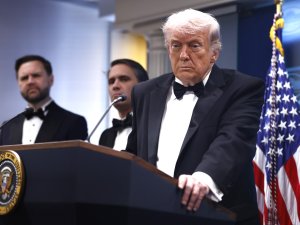
WASHINGTON — Federal authorities are investigating what they describe as a targeted attack near the White House Correspondents’ Association dinner after a man opened fire Saturday evening outside the secured perimeter of the event, prompting a rapid response from Secret Service agents and other law enforcement. Acting Attorney General Todd Blanche said Sunday that investigators believe the suspect intended to target President Donald Trump and members of his administration who were attending the annual dinner, one of Washington’s highest-profile political gatherings. According to Blanche, the suspect traveled from California to Washington, D.C., by train, passing through Chicago along the way… |

|
France ready to summon US ambassador over far right comments
According to French Foreign Minister Jean-Noel Barrot, US Ambassador Charles Kushner will be summoned in response to the US embassy's recent statements regarding the murder of a far-right French activist in Lyon, a city located in the southeastern region of France, earlier this month. On Sunday, Barrot informed the French newspaper Le Monde and public broadcasters France Inter and France Info that he intended to summon the United States ambassador to France due to the US embassy's commentary on the tragedy, which affects the national community. He further stated, "We are opposed to any attempt to exploit this tragedy for political gain." The Ministry for Europe and Foreign Affairs did not sp… |

|
A series of mistakes caused a tragic fire in Hong Kong
An independent committee looking into the origin of Hong Kong's worst fire in decades heard testimony on Thursday about how a number of mistakes led to the 2025 inferno that destroyed seven buildings and killed 168 people. The hearings in the case began. Since the fire destroyed the close-knit neighborhood of Wang Fuk Court in November 2025, former inhabitants and family members of the dead have been waiting for answers. The community was home to thousands of individuals in the suburban area of Tai Po. Victor Dawes, the chief lawyer for the committee, stated in his opening remarks that the most likely cause of the fire was cigarettes that ignited other things on fire on a platform in an air … |

|
William Shatner from Star Trek Falls From Horse With Serious Injury
William Shatner’s recent accident is more than a celebrity headline. At 94, the Star Trek legend fell from a horse, shattering his shoulder and requiring surgery. Days later, he appeared at the Saturn Awards, visibly fatigued but still commanding the stage, asking only for a chair as he accepted recognition for his contributions to science fiction. That moment, followed by his surgery, forces us to confront uncomfortable truths about aging, vitality, and society’s double standards. We celebrate youth for daring but chastise elders for the same courage. If a 30-year-old athlete falls from a horse, we call it grit. When Shatner does it, critics call it reckless. Yet risk is universal. Horses t… |

|
Mad as Hell and Tired of Dictators
Letter to the Editor Title: Mad as Hell and Tired of Dictators Author Tim Crestin Look, I ain’t no professor. I’m just a guy who works with his hands. Welding torch, pizza boxes, grocery aisles—you name it, I’ve done it. I’m scrappin’ pennies for journalism school ’cause I still believe words matter. But lemme tell ya, right now I feel like I belong on another planet. This one? It’s busted. Here’s the truth nobody wants to spit out: there’s always gonna be some two-bit wannabe dictator struttin’ around, puffin’ his chest, promisin’ he’s gonna fix everything. That ain’t the shock. The shock is how many nitwits line up to vote for him. The “big man” lovers, the angry mugs, the ones who think s… |
|
We Built Systems to Avoid Responsibility and Now They Are Failing Us
Halenews Editorial A HaleNews feature editorial on responsibility, governance, and the cost of delay. For much of modern history, progress has been treated as a natural force—something that happens automatically as time passes, technology improves, and societies mature. This assumption is comforting, but it is also false. Progress has never been inevitable. It has always been the result of deliberate choices made under pressure, often against the interests of those who benefited from delay. What distinguishes the current moment is not the presence of crisis, but the convergence of crises that all demand the same thing: responsibility exercised before catastrophe makes it unavoidable. Climate… |
|
Crossing Trump and his Insurrection in Minnesota
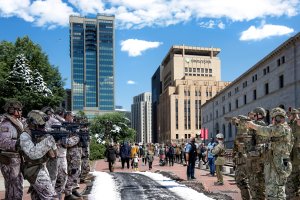
Editorial Minnesota is standing on a line most people pretend doesn’t exist until it’s under their feet. The killing of Renée Good didn’t just spark protests. It tore open a fracture that’s been widening for years, one where federal power shows up without consent, accountability drifts upward into silence, and states are left holding the consequences. The question now isn’t whether order returns. It’s who gets to impose it, who they answer to, and which law they plan to hide behind when it goes wrong. That law has a name, and it’s older than most Americans realize. The Insurrection Act of 1807 sits on the books like a quiet threat, rarely mentioned, almost never explained, waiting for the mo… |

|
Trump to raise US global tariff to 15 percent after Supreme Court ruling
United States President Donald Trump has doubled down on his new global tariffs, raising them from 10 percent to 15 percent, days after the Supreme Court struck down his sweeping levies on imports. The move on Saturday came as businesses and governments around the world sought repayment for the estimated $133bn that Washington has already collected. In a post on his Truth Social platform, Trump announced the raise “effective immediately” and said the move was based on a review of the “ridiculous, poorly written and extraordinarily anti-American decision” issued by the Supreme Court on Friday. By a six-to-three vote, the court had ruled that it was unconstitutional for Trump to unilaterally s… |