
|
Recent Articles
| Image | Title & Summary |
|---|---|

|
The Assassination of Malcolm X
On February 21, 1965, Malcolm X woke up alone in a suite at the Hilton Hotel in New York City.He was, in the most literal sense, a guy without a home. The week before, someone had set fire to his house in the East Elmhurst neighborhood of Queens in the middle of the night. His wife, Betty Shabazz, and his four small children were all well, but for their own protection, they were currently residing with friends in a secret location.Malcolm was sure that his old coworkers from the Nation of Islam (NOI), led by Elijah Muhammad, were responsible for the firebombing. He used to be the second most influential person in the religious and political movement, but now he had to watch out for the milit… |
|
Democrats fear rising that too many candidates in governor race could lead to a Republican victory
SAN FRANCISCO — Leaders of the California Democratic Party, along with liberal activists and loyal power brokers, are openly expressing fear that their crowded field of candidates running for governor may splinter the vote and open the door to a surprise Republican victory in November. Because of those concerns, the Democrats lagging at the bottom of the pack are being urged to drop out of the race to ensure that the party’s political dominance in statewide elections survives the 2026 election. “California Democrats are prepared to do what’s required,” state party chairman Rusty Hicks told reporters at the California Democratic Party’s annual convention on Friday. “We are ready and willing a… |
|
Kansas town is getting an underground nuclear reactor and splits the townspeople
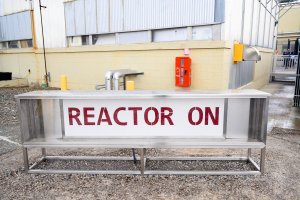
The so-called Gravity Reactor is being proposed by a California-based start-up company from a father-daughter duo, Liz Muller and Richard Muller Removed from bookmarks A pilot project to bury a nuclear reactor one mile underneath a town in Kansas has split the opinion of local residents, with some fearing the environmental impacts while others hope it will create economic opportunities. The so-called Gravity Reactor is being proposed by Deep Fission, a California-based start-up from a father-daughter duo, Liz Muller and Richard Muller, emeritus professor of physics at University of California, and an inventor. It will be the first time a commercial nuclear reactor operates underground. The s… |

|
Michael Caine Biography
When Michael Caine led a squad of English gangsters to participate in an ambitious heist of gold from Italy in the film "Italian Job" (1969), it became another famous film of the 1960s. Later on, the film was recreated, and it became famous for the chase scenes that included Mini Coopers. Although he was born Maurice Joseph Micklewhite, he chose the stage name Michael Caine later in his career. With a voice that is distinctly associated with the working class, Michael Caine is widely considered to be one of the most famous English actors of the post-war era. He has appeared in more than one hundred films. On March 14, 1933, Michael Caine was born in Rotherhithe, which is located in London, E… |
|
Gulf strikes stoke concerns of new conflict with Iran
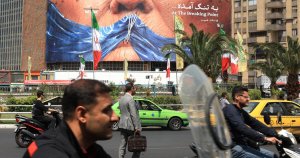
Uncertainty hung over the survival of a fragile ceasefire between the United States and Iran on Monday as a new wave of strikes on the United Arab Emirates and Oman and rumors of attacks on ships in the Strait of Hormuz undercut trust in the truce. The drone and missile attacks, the first since a truce ended combat earlier in April, came after the Trump administration started a wide-scale naval operation Monday to “guide” trapped maritime vessels out of the critical channel. However, concerns of a resumption of warfare have sparked yet another rise in the price of oil, which has shot up to above $114 a barrel, a level not seen since the truce over a month ago. The Gulf has trapped hundreds o… |

|
AI companies accused of copyrighted infringement
Opinion | Editorial The open letter signed by Scarlett Johansson and hundreds of other creatives didn’t land because it was polite. It landed because it said the quiet part out loud: training commercial AI systems on copyrighted work without permission is theft dressed up as inevitability. The industry has spent years insisting this was a philosophical debate about progress. It isn’t. It’s a business choice—and a corrosive one. The letter, organized through the Human Artistry Campaign, rejects the soothing language that has insulated AI companies from accountability. “Learning,” “absorption,” “transformation.” These words are doing legal work, not descriptive work. They exist to blur a simpl… |
|
Convicted murderer rearrested after cutting GPS monitor
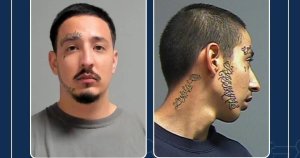
This is read by an automated voice. Please report any issues or inconsistencies here. Authorities have caught a convicted murderer who they say was on probation and cut off his GPS ankle monitor and disappeared while attending classes at an Orange County community college. Jose Angel Aguilar, 22, was found around 11 p.m. Thursday and taken into custody without incident after Anaheim SWAT officers executed a search warrant at a motel room where the youth had been observed, according to the Orange County Probation Department. Aguilar fled Tuesday from Santiago Canyon College while on a court-approved academic furlough from a juvenile probation facility, according to the Orange County Probation… |

|
Did Donald Trump suffer a serious stroke
Opinion | Editorial A sitting president allegedly suffered a stroke in 2025, and the White House kept it secret. The claim, reported by a doctor, is explosive not because it is unprecedented but because it fits a long tradition of concealment. American democracy has always struggled with the tension between transparency and control, between the public’s right to know and the state’s instinct to protect power. If Donald Trump did suffer a stroke, and if his administration hid it, then we are not simply talking about one man’s health. We are talking about the erosion of democratic accountability itself. The presidency is not just another job. It is the most powerful office in the world, and it… |

|
Rebecca Grossman murdered 2 boys when she sped through a crosswalk
This is read by an automated voice. Please report any issues or inconsistencies here. Rebecca Grossman murdered two young brothers when she sped through a Westlake Village crosswalk, a jury found two years ago. Now, a state appeals court has upheld that verdict. Grossman, the co-founder of the Grossman Burn Foundation, is serving 15 years to life in state prison for the second-degree murders of 11-year-old Mark Iskander and 8-year-old Jacob Iskander. On Tuesday, the California 2nd District Court of Appeal upheld the Feb. 23, 2024, conviction of the wife of renowned surgeon Peter Grossman. Rebecca Grossman’s six-week trial was filled with dramatic testimony and evidence that she struck the bo… |
|
Trump and US officials targeted by accused shooter
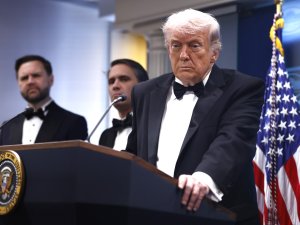
WASHINGTON — Federal authorities are investigating what they describe as a targeted attack near the White House Correspondents’ Association dinner after a man opened fire Saturday evening outside the secured perimeter of the event, prompting a rapid response from Secret Service agents and other law enforcement. Acting Attorney General Todd Blanche said Sunday that investigators believe the suspect intended to target President Donald Trump and members of his administration who were attending the annual dinner, one of Washington’s highest-profile political gatherings. According to Blanche, the suspect traveled from California to Washington, D.C., by train, passing through Chicago along the way… |
|
Two more people die while skiing in the Lake Tahoe region
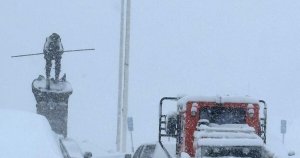
There have been two additional fatalities in the Sierra Nevada, adding to the total number of fatalities that have occurred throughout the winter season. The avalanche that occurred on Castle Peak last week killed nine lives. According to the Douglas County Sheriff's Office, which arrived just before noon, the most recent deaths occurred on Friday in two "fatal ski incidents" that were unrelated to each other at the Boulder Lodge of Heavenly resort. In a press statement, the Sheriff's Office stated that paramedics from the Ski Patrol and the Tahoe Douglas Fire Protection District attempted to save the life of the subject. On the other hand, both persons were pronounced dead at the site of th… |
|
US judge blocks Trumps 2bn anti weaponization fund
A United States federal judge has temporarily blocked President Donald Trump’s nearly $1.8bn “anti-weaponisation fund” to compensate victims of alleged government “lawfare”. On Friday, US District Judge Leonie Brinkema of the Eastern District of Virginia blocked the Trump administration from “taking any further action” to set up or operate the fund while she hears legal arguments. The judge, who was nominated to the bench by President Bill Clinton, scheduled a June 12 hearing about whether to extend the order blocking payouts. The Department of Justice announced the fund last week as part of an agreement to settle a lawsuit brought on behalf of Donald Trump, in his personal capacity, against… |

|
US journalist Don Lemon arrested after covering anti-ICE protest at Minnesota church
US journalist Don Lemon and three other people were arrested on Friday in connection with an anti-immigration crackdown protest that disrupted a service at a Minnesota church and increased tensions between residents and the Trump administration, officials said. Lemon was arrested by federal agents in Los Angeles, where he had been covering the Grammy Awards, his attorney Abbe Lowell said. It is unclear what charge or charges Lemon and the others are facing in the 18 January protest at the Cities Church in St. Paul. Lemon's arrest came after a magistrate judge last week rejected prosecutors' initial bid to charge him. Lemon, who was fired from CNN in 2023, has said he has no affiliation to th… |

|
How Google Is Attempting to Silence Independent News Sites
Part I: The Silent Wall The internet was supposed to be the great equalizer. It promised that anyone with conviction and a keyboard could publish, and the world could read. For a time, that promise felt real. Independent voices flourished, blogs became movements, and small publishers carved out spaces where truth could breathe. But today, that promise is collapsing. Small publishers are running headlong into a wall they cannot see. This wall is not built of stone or law. It is built of code. Invisible filters decide what is “safe,” what is “indexable,” what is “fetchable.” And when those filters misfire—or when they are designed to favor the giants—small publishers vanish. Consider the lived… |

|
Trump announces 25 percent tariffs on European Union cars and trucks
United States President Donald Trump has said he will increase tariffs on automobiles from the European Union to 25 per cent. The announcement on Friday could jolt the world economy at a time when it is already fragile from the knock-ons of the US-Israel war with Iran. It came months after the US and the EU had forged a trade deal as Trump imposed sweeping reciprocal tariffs on trade partners across the world. The agreement set tariffs on most goods at 15 percent, lower than the 30 percent Trump had previously threatened. In a post on Truth Social, Trump accused the EU of “not complying with our fully agreed to Trade Deal”, without providing further details. Trump added that he “fully unders… |

|
Rail regulators accused of ignoring safety recommendations
More than 3,000 rail accidents, causing 23 deaths and nearly 1,200 injuries over the past decade, have been attributed to human error and track defects. Yet, federal railroad regulators have largely ignored most safety recommendations arising from these investigations, according to a new study. An analysis by the Howard Center for Investigative Journalism at the University of Maryland reveals a powerful industry behind these failures, using its influence to thwart federal safety reforms. It is accused of actively lobbying President Donald Trump’s administration to reduce track inspection and repair requirements and loosen rules aimed at preventing crew fatigue. The center’s analysis of data … |
|
The Epstein Files and the Machinery of Forgetting
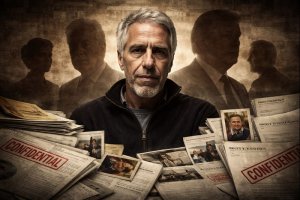
Editorial The first instinct of power, when threatened, is not denial but delay. Delay until outrage exhausts itself, until headlines thin, until the public grows bored or distracted or numb. The newly unsealed Jeffrey Epstein-related documents land in public view with the weight of something both familiar and unfinished, a reminder not merely of a disgraced financier and the crimes that orbited him, but of how expertly the machinery of forgetting has been engineered. These files do not arrive as a revelation in the cinematic sense. There is no single smoking gun, no neat moral closure. Instead, they arrive like sediment, layer upon layer of testimony, allegation, recollection, and evasion. … |
|
We Built Systems to Avoid Responsibility and Now They Are Failing Us
Halenews Editorial A HaleNews feature editorial on responsibility, governance, and the cost of delay. For much of modern history, progress has been treated as a natural force—something that happens automatically as time passes, technology improves, and societies mature. This assumption is comforting, but it is also false. Progress has never been inevitable. It has always been the result of deliberate choices made under pressure, often against the interests of those who benefited from delay. What distinguishes the current moment is not the presence of crisis, but the convergence of crises that all demand the same thing: responsibility exercised before catastrophe makes it unavoidable. Climate… |

|
Daughter and son-in-law charged with killing four family members in 2015
Shocking new charges have been brought in the case of a family that was brutally murdered in their homes on Halloween night in 2015. Cathy Scott, her husband Michael Scott, Mr Scott's mother, Barbara, and Ms Scott's mother, Violet Taylor, were murdered on Halloween night in 2015. Now, the couple’s daughter, Amy Vilardi, and her husband, Rosmore "Ross" Vilardi, have been arrested and charged in their deaths. Ms Vilardi and her husband were featured in tearful television interviews following the murders, but are now considered the prime suspects in the slayings, according to The Daily Beast. The four adults were found shot and killed in their homes in Pendleton, South Carolina, on 2 November 2… |
|
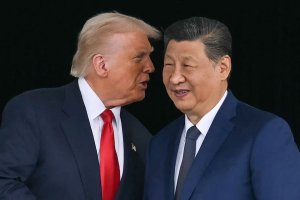
China with its axis of authoritarians is only growing stronger under Trump
As Donald Trump prepares to depart for China to meet Xi Jinping, it is a moment for America’s traditional allies to reflect on a sobering fact: the balance of power is rapidly shifting against the United States. Since becoming president, Trump’s actions have fractured America’s alliance system just as Xi Jinping and Vladimir Putin have consolidated theirs. As if to underscore this, the Russian president will likely arrive in Beijing days after Trump. His will be a red carpet welcome. Donald Trump’s will be far more exposing – and we all know why. Instead of a mighty demonstration of American firepower, his Iran war has exposed huge vulnerabilities. And less discussed but no less consequentia… |