
|
Recent Articles
| Image | Title & Summary |
|---|---|
|
Democrats fear rising that too many candidates in governor race could lead to a Republican victory
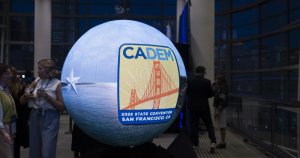
SAN FRANCISCO — Leaders of the California Democratic Party, along with liberal activists and loyal power brokers, are openly expressing fear that their crowded field of candidates running for governor may splinter the vote and open the door to a surprise Republican victory in November. Because of those concerns, the Democrats lagging at the bottom of the pack are being urged to drop out of the race to ensure that the party’s political dominance in statewide elections survives the 2026 election. “California Democrats are prepared to do what’s required,” state party chairman Rusty Hicks told reporters at the California Democratic Party’s annual convention on Friday. “We are ready and willing a… |

|
Energy Realism. Physics Over Slogans
Opinion | Feature Editorial Energy Realism: Physics Over Slogans The Grid at Midnight Picture a city at midnight. The wind has calmed, solar panels are dark, and the grid leans heavily on backup power. Politicians speak of “green revolutions,” but engineers know the reality: electrons obey physics, not slogans. The global conversation about energy has become strangely unserious for something so foundational to modern life. We cling to absolutes, divide into camps, and prefer moral certainty over physical reality. The result is passion without progress. Part I: Energy as Physics, Not Branding Energy systems are not ideological constructs. They are physical networks governed by constraints: st… |

|
Children Kidnapped is The Everyday Horror We Pretend Is not Happening
Opinion | Editorial The words “Children Kidnapped!” should stop us cold. They should rip through the noise of daily life, louder than any headline about markets or elections. Yet somehow, they don’t. We scroll past them, we shake our heads, we mutter “how awful,” and then we move on. That is the scandal. Society has learned to absorb the shock of child abductions as if it were routine. The recent case of a school bus driver accused of kidnapping after allegedly veering off his route is not an isolated nightmare. It is a symptom of a deeper rot. Parents put their children on buses every morning, believing in the ritual of safety. Signs such as yellow paint, stop signs, and uniforms serve as r… |

|
Trump says if Iran does not open the Strait of Hormuz within 48 hours he would destroy their power plants
On Saturday night, Trump warned Iran in a Truth Social post that the United States will attack Iran's power reactors if the Strait of Hormuz stays blocked. "The United States of America will hit and destroy their various power plants, starting with the biggest one first!" Trump warned in the post if Iran does not fully open the Strait of Hormuz without threat within 48 hours from now. The Strait of Hormuz is an important trading route that carries around 20% of the world's oil. Oil prices have skyrocketed worldwide as a result of Iranian strikes on ships in the region, which has effectively cut off maritime activity in the area. The Trump administration has made yet another effort to rein do… |

|
World faces food catastrophe if Strait of Hormuz disruption persists
A prolonged disruption in the Strait of Hormuz could result in a global food “catastrophe”, the Food and Agriculture Organization (FAO) has warned, as shipments of critical agricultural inputs remain blocked in the key waterway due to the US-Israel war on Iran. Food prices have not risen yet because existing stocks are absorbing the shock, the United Nations body’s chief economist, Maximo Torero, said in an interview on Monday, alongside David Laborde, director of FAO’s agrifood economics division. But if traffic through the strait does not resume, the shocks to energy and fertiliser markets will translate into higher commodity and retail prices later this year and into 2027, Laborde added. … |

|
The Death of an Open Web Has Already Begun
Feature Editorial We are currently experiencing the most significant deception in human history. It began with the promise of "frictionless" living—a world where every necessity, from your morning protein shake to your child’s educational software, could be summoned with a single, mindless click. We were told that the subscription model would liberate us from the "drudgery" of errands and the "burden" of ownership. However, as the digital revolution comes to an end, it becomes clear that convenience was actually the trap. Once inside our gates, it didn't bring freedom; it brought a persistent, systemic drainage of our finances and a quiet, algorithmic execution of independent voices. The Psy… |

|
Four victims dead after stabbing attack in Washington State
A 32-year-old man in the United States has stabbed four people to death outside a home on the Key Peninsula, northwest of Tacoma, in Washington state. The suspect was later shot and killed by a Pierce County sheriff’s deputy. The attack unfolded on Tuesday morning. Deputies from the Pierce County Sheriff’s Office were dispatched at about 8:41am local time (16:41 GMT) following reports that the suspect had violated a no-contact order, according to The Associated Press. Officers obtained a copy of the no-contact order, but found it was not yet valid because it had not been served against the suspect. They left to deliver the order in person. But while officers were in transit, the 32-year-old … |

|
Iran will not bow down to US pressure in nuclear talks
Iran’s ?President ?Masoud Pezeshkian has pledged not to fold to pressure from the United States after his American counterpart, Donald Trump, said he was considering limited strikes to force a deal on Tehran’s nuclear programme. Pezeshkian’s comments on Saturday came amid high tensions in the Gulf, with the US continuing to grow its military presence with the deployment of two aircraft carriers and dozens of jets. “We will not bow down in the face of any of these difficulties,” Pezeshkian said at a ceremony to honour members of the Iranian Paralympics team. “World powers are lining up with cowardice to force us to bow our heads. Just as you did not bow down in the face of difficulties, we wi… |
|
The World Is Burning Quietly While We Argue About Nothing
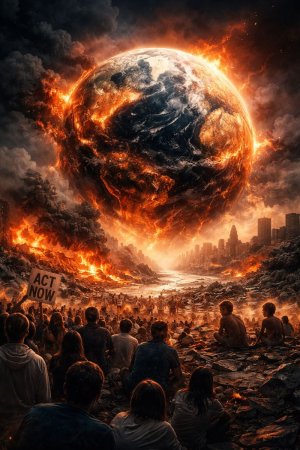
Letters To Editor By Alan Fitpatrik It has become strangely normal to live in a moment where the planet is warming, wars drag on without clear ends, and scientific breakthroughs quietly move forward while political arguments stay stuck in place. We are surrounded by evidence of what humans can do at their best, yet governed too often by systems that reward delay, fear, or brute control. This contrast is not abstract. It shows up in flooded neighborhoods, in families displaced by conflict, and in the widening gap between those who can afford to adapt and those who cannot. When leaders cling to power through force or deception, it is rarely the powerful who suffer first. It is the poor, the yo… |

|
Weight Loss Drugs Are Revealing Side Effects
Weight loss drugs are reshaping bodies and expectations, but a new wave of research suggests the real story is just beginning. Patients are reporting side effects that clinical trials missed, raising a harder question about what we are only now starting to see. An injection once a week. Not as hungry. You lose weight without the everyday battle that most people lose. No surgery. Don't go on severe diets. No obvious pain. For millions of people, drugs like Ozempic, Wegovy, and Mounjaro did what nothing else had been able to do on a large scale. They did what they were supposed to do. Quick enough to feel genuine. Powerful enough to change behavior without demanding constant discipline. That's… |
|
Winning peace in Lebanon is harder than winning war
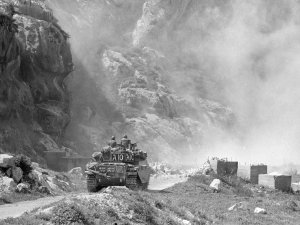
But a symbolic meeting would not be enough to resolve the conflict in Lebanon, which has deep historical roots and a wide geopolitical reach. Despite the ceasefire, Israel continues to occupy parts of southern Lebanon. The aim of the ongoing operation, as declared by Defense Minister Israel Katz, is to establish a “security zone” over the entire area south of the Litani River – which represents 10 percent of Lebanon’s national territory. The civilian population has been barred from returning to their homes while Israeli forces have continued bombing and mass demolition. Netanyahu appears to be using the narrative of “destroying Hezbollah” to cover up what is really a campaign of mass destruc… |

|
An Orca Calf Was Trapped Alone Inside a Remote Lagoon
VANCOUVER ISLAND — For nearly a month, a young orphaned killer whale trapped inside a shallow lagoon off Vancouver Island became something rare in modern news: a story people followed not because they were told to be angry, terrified, or politically divided, but because they desperately wanted something living to survive. This week, after repeated failures, dangerous tidal conditions, and growing fears the animal would either starve or succumb to isolation, the calf finally escaped the lagoon and rejoined its pod in open water. The rescue unfolded near Zeballos on the northwest coast of Vancouver Island, where the young female orca had remained trapped since late March after her pregnant mot… |
|
Gulf strikes stoke concerns of new conflict with Iran
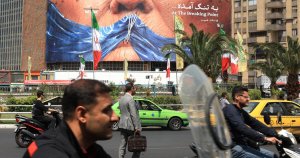
Uncertainty hung over the survival of a fragile ceasefire between the United States and Iran on Monday as a new wave of strikes on the United Arab Emirates and Oman and rumors of attacks on ships in the Strait of Hormuz undercut trust in the truce. The drone and missile attacks, the first since a truce ended combat earlier in April, came after the Trump administration started a wide-scale naval operation Monday to “guide” trapped maritime vessels out of the critical channel. However, concerns of a resumption of warfare have sparked yet another rise in the price of oil, which has shot up to above $114 a barrel, a level not seen since the truce over a month ago. The Gulf has trapped hundreds o… |

|
What Delay Looks Like When You are Absorbing the Cost
Halenews Editorial Delay is often described as prudence. From a distance, waiting can look reasonable, even wise. But distance matters. When you live close to the edge, delay is not neutral time—it is pressure. For families already stretched thin, rising energy prices are not a debate about markets; they are a calculation about heat. Flooding is not an environmental statistic; it is a ruined home. Healthcare access is not a policy disagreement; it is a postponed diagnosis that becomes irreversible. Those most affected by delay rarely appear in policy discussions except as data points. Their lives are summarized, averaged, and footnoted. Meanwhile, decisions are postponed to avoid political r… |

|
Why Are Cereal Boxes Only Half Full
Consumer Investigative The first time you notice it, you assume you’re imagining things. You open a familiar cereal box — the same brand you’ve bought since childhood — and it feels oddly light. You shake it. You peer inside. Half the box is empty. You tell yourself it must be settling. That’s what we’ve been trained to think. Gravity, transport, crumbs falling into gaps. Physics, not profit. But physics doesn’t explain why the box itself hasn’t gotten any smaller. This is not an accident. It is a business strategy, and it has a name: shrinkflation. Companies quietly reduce the amount of product while keeping the packaging, branding, and price largely the same. The goal is simple: preserve p… |

|
They Married When He Was Supposed to Die
Human Interest He was dying, and it was the saddest thing for their relatives, friends, and even the hospital staff. Most of all, Arlaine, his longtime girlfriend, was with him in the hospital. They'd been together for decades before the illness. Now, the room smelled of antiseptic and overripe flowers—the kind people buy when they’re afraid they’ve waited too long. The lights were too bright, and the machines emitted steady, monotonous noises. Bendigo Davies lay flat on his back, staring at a ceiling he hadn’t chosen, while Arlaine stood beside him, holding his hand like it was the last solid thing in the room. But they looked and admired each other, the smiles hiding dreadful worry. They h… |

|
Smile for the Camera because Immigration Enforcement Gets a Makeover
Guest Editorial I'm writing this from Saigon, where traffic confidently ignores rules, and no one pretends that chaos is order. The atmosphere is refreshing. Handguns are not allowed in Vietnam, and I haven't seen a police officer in over a year—not even any traffic accidents. It's amazing. There's no road rage here. I've been away long enough to witness Trump veering toward obscurity or damnation. Not sure which, but it will be exciting. I admit I’m biased. Can you tell? Distance sharpens perspective. There's no violent crime here, and the people are friendly. You can see American politics more clearly when you’re far enough away to stop smelling the perfume it sprays on itself. So, I felt … |
|
Hegseth says more US forces arriving in Middle East as Iran war ramps up
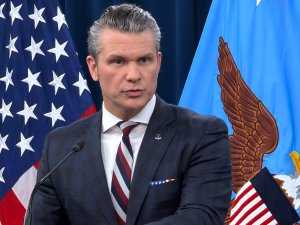
US Defense Secretary Pete Hegseth has said more United States forces are arriving in the Middle East, as the country’s war against Iran intensifies amid mounting concerns over the civilian toll of US-Israeli strikes. Hegseth said during a news conference at the Pentagon on Wednesday that the US-Israeli campaign against Iran was “just getting started”. “We are accelerating, not decelerating … More bombers and more fighters are arriving just today,” he told reporters, adding that the US would be using a “nearly unlimited” supply of 226kg (500lb), 453kg (1,000lb) and 900kg (2,000lb) bombs. The US and Israel, he said, would sow “death and destruction from the sky, all day long”. Hegseth’s combat… |

|
Iran Prepares for US Attack as It Rejects Negotiations
Iran is not dancing toward the negotiating table out of fear; it is bracing for war while refusing to yield. Reports that Tehran is preparing for a possible U.S.–Israeli missile assault, even as it dismisses offers to talk, underscore a new kind of tension: fear without capitulation. That is not weakness, and it is not readiness in the traditional sense. It is a regime calculating its own survival amid an increasingly hostile international environment. This moment looks nothing like the hope-tinged diplomacy of past nuclear talks. Then, there were back channels, envoys meeting in hotel suites, whispered negotiations and, at times, fragile progress. Now the language is public posturing, threa… |

|
Rail regulators accused of ignoring safety recommendations
More than 3,000 rail accidents, causing 23 deaths and nearly 1,200 injuries over the past decade, have been attributed to human error and track defects. Yet, federal railroad regulators have largely ignored most safety recommendations arising from these investigations, according to a new study. An analysis by the Howard Center for Investigative Journalism at the University of Maryland reveals a powerful industry behind these failures, using its influence to thwart federal safety reforms. It is accused of actively lobbying President Donald Trump’s administration to reduce track inspection and repair requirements and loosen rules aimed at preventing crew fatigue. The center’s analysis of data … |