
Exclusive Feature
The church in Tupelo was quiet that morning, sunlight spilling through tall windows. Gladys Love Smith sat near the front, hands folded, eyes were soft, her posture shy.
Vernon Elvis Presley entered late, shoulders bent from the weight of small burdens, his clothes plain, his steps uncertain. Yet when he looked up, his gaze caught hers, and their feelings soared.
Gladys lowered her eyes quickly, cheeks warm. “Don’t stare,” she whispered to herself, though her heart beat faster.
Vernon lingered in the aisle, hesitant, then slid into the pew across from her. His voice was low, almost unsure, when he leaned slightly and said, “Do you come here often?”
Her lips parted, but her words faltered. “I… I do. Most Sundays.” Her tone was gentle, almost apologetic, as if afraid her presence might be too small to matter.
He smiled faintly, the kind of smile that carried both kindness and loneliness. “I’m glad I came today.”
Gladys looked up then, meeting his eyes fully. In that moment, she felt seen—not for her weakness, not for her lack of confidence, but for the quiet love she carried inside.
The hymn began, voices rising around them, but they heard only each other. She sang softly, her voice trembling yet sweet, and he listened as though it were the only sound in the world.
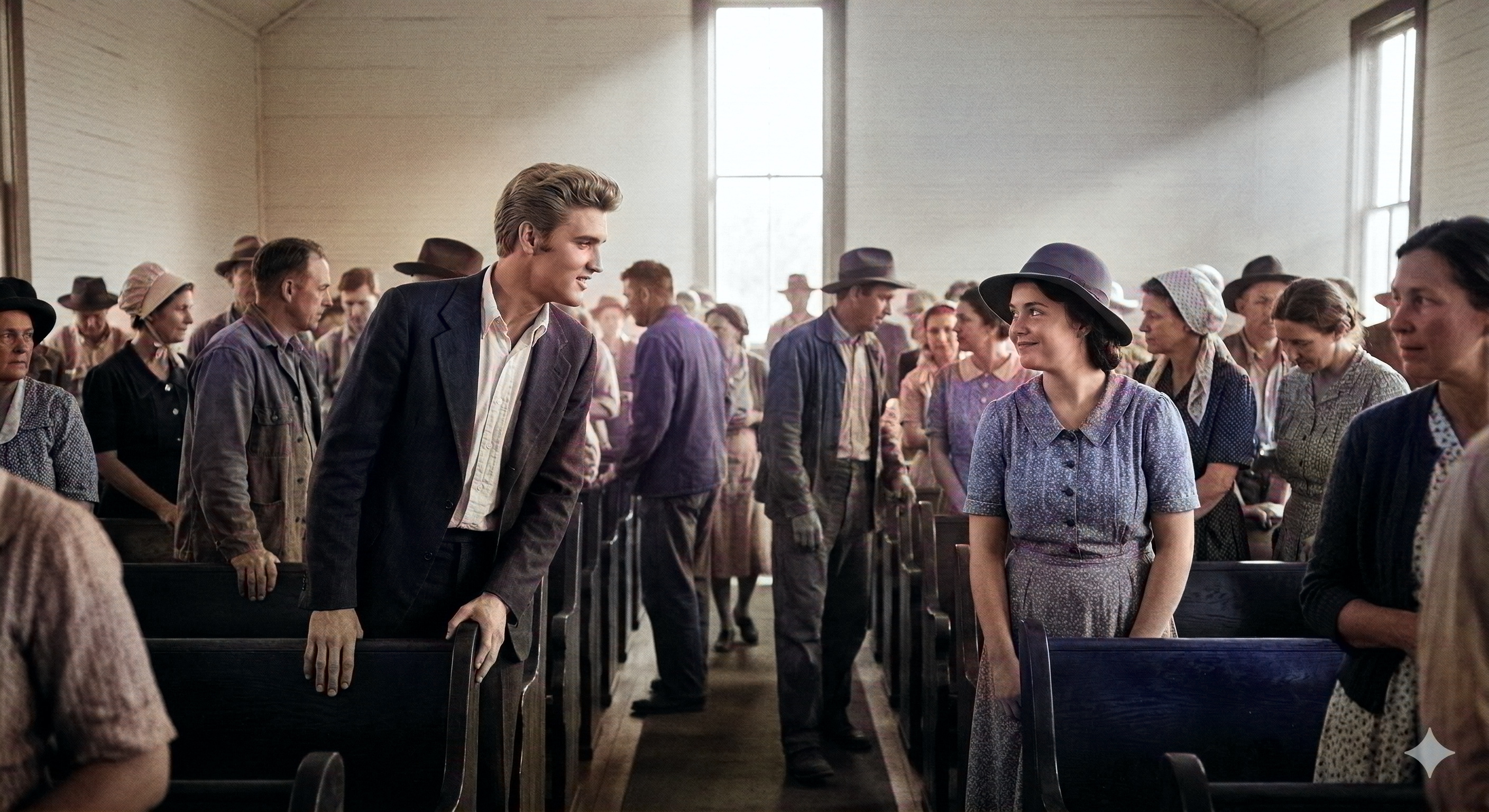
When the service ended, he walked beside her, careful not to rush. “You seem… different,” he said, searching for words. “Gentle. Kind.”
Her smile was small, uncertain. “I don’t know if I am. But thank you.”
He paused, then added quietly, “I think I’d like to know you better.”
Gladys lowered her gaze again, shy but glowing. “Maybe… if you’re patient.”
And so, in the hush of that church, two fragile hearts found each other — one sensitive and unsure, the other lonely but hopeful. Neither knew what the future held, only that something had begun, something tender enough to change their lives forever.
Growing Closeness and Shared Longing
The days after their first meeting unfolded gently, like pages in a hymn book. Verbib began walking Gladys home after church, their steps slow, their words hesitant but warm. She often lowered her gaze, unsure of herself, but he would lift her chin with a smile that said, “You matter.”
They grew close in small ways. He carried her basket when she went to market. She mended the tear in his shirt with careful stitches. At night, they sat together in silence, listening to the crickets outside, their hands brushing but never letting go.
Yet life was hard. His work was scattered — hauling wood, tending fields, whatever he could find. Some days he returned with aching shoulders and empty pockets. Gladys would greet Vernon with tenderness, though her eyes betrayed worry.
“I wish I could give you more,” he whispered once, ashamed.
“You give me enough,” she replied softly, though her voice trembled. “But sometimes… I feel so alone when you’re gone.”
Her loneliness pressed heavy when he worked long hours. She lingered by the window, watching shadows stretch across the yard, whispering prayers into the quiet. Sensitive and loving, she longed for someone to fill the silence — a child to cradle, a voice to brighten the room.
One evening, Gladys spoke her heart aloud. “Do you ever dream of a baby?”
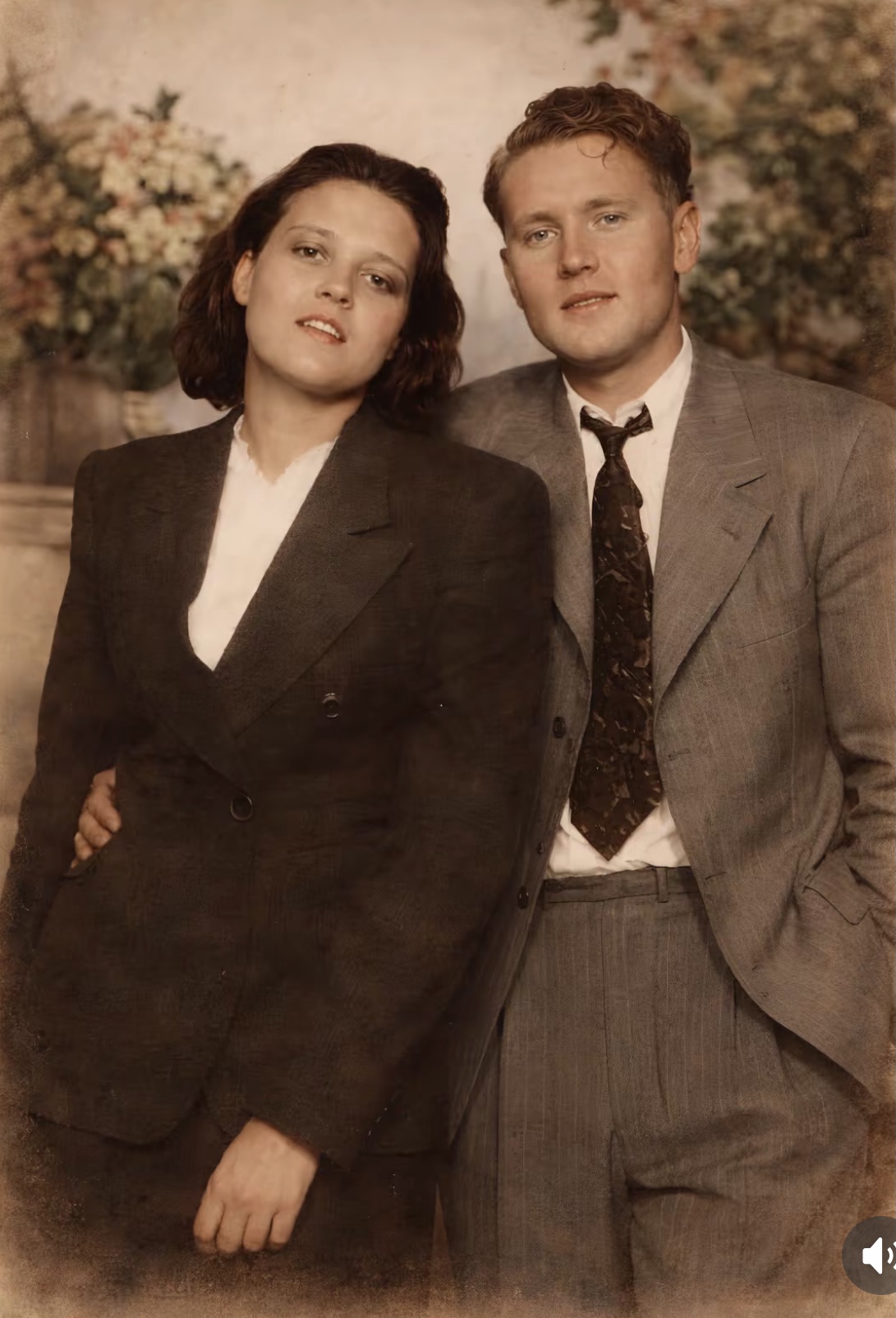
Vernon looked at her, surprised, then nodded. “Every day. I dream of holding a little one, of hearing laughter in this house.”
Her eyes glistened. “I want that too. More than anything.”
They sat together, hands entwined, imagining a child who would bring light into their dim world. Though hunger and debt shadowed them, their shared longing became a promise — fragile, uncertain, but strong enough to carry them through the sadness.
The room was small, its walls bare except for a calendar curling at the edges. A single lamp threw a soft glow across the wooden floor, where the boards carried the memory of every step. The quilt on the bed was worn, patched with care, its faded colors a quiet testimony to her hands.
She stood near the window, the pale blue of her cotton dress catching the light. Tiny flowers stitched along the hem trembled as she shifted, tugging at the fabric with unease. Already she imagined the dress tightening, her body changing, her beauty slipping away. She pressed her palms together, uncertain, yet her heart carried a secret too radiant to hide.
He entered, shoulders heavy from the day, his boots leaving dust in their wake. He paused when he saw her, sensing something in her stillness.
“You’re waiting for me,” he said softly, setting his tools aside.
Her voice quivered. “I have something to tell you.” She guided his hand, resting it against her stomach. “There is life here. Our child.”
The silence that followed was vast, filled with the hum of the lamp and the beating of two hearts. His breath caught, his eyes widened, and he whispered, “A child?”
She nodded, tears rising. “Yes. I prayed for this. I thought perhaps it would never come. But it has.”
Her words faltered, doubts spilling like shadows. “I fear I’ll grow heavy, lose what little beauty I have. Will you still look at me the same? I want to be a mother, I know I’ll be good at it, but I need your love too. Without it, I’ll feel so small.”
He cupped her face, his voice steady, tender. “You are already beautiful. When you carry our child, you will be more radiant than ever. My love will not fade. It will grow.”
Her tears turned to laughter, fragile yet bright. “Then I’ll believe it. I’ll believe I can be both — the mother our child needs, and the woman you love.”
He drew her close, his arms trembling with joy. “We’ll face it together. Hard times, hunger, whatever comes. This child will know tenderness because of you. And I will never stop loving you.”
She pressed her forehead against his chest, whispering through her tears, “Then love will be enough.”
And in that small house, with its bare walls and worn quilt, joy bloomed like sunlight breaking through clouds, fragile yet eternal.
The Birth
The night was cold, the air heavy with silence. Inside the small house, the lamp flickered, casting shadows across the walls. Gladys, who was to be a mother for the first time, lay upon the bed, her dress folded neatly on the chair, her hair damp against her forehead. Her husband sat beside her, his hands trembling, his eyes fixed on her face as waves of pain broke through her body.
The hours stretched, each one heavier than the last. Her cries filled the room, soft at first, then sharp, then fading into whispers.
At last, the child came. A boy they named Jessie Garon. Tiny, fragile, silent. The room stilled. She reached for him, her hands shaking, her heart already breaking. His skin was pale, his breath was gone. She pressed her lips to his forehead, tears falling onto his still body.
“No,” she whispered, her voice raw. “Please, my God, no.”
Vernon turned away, his shoulders bent, his face buried in his hands. The silence was unbearable, the weight of the death pressed down on her like a heavy rock. The boy had come into the world only to die, leaving behind a hollow ache that filled the room.
She picked up and held the child against her chest, rocking him though he did not move. “I prayed for you,” she sobbed. “I prayed so hard.” Her voice broke, her body trembling with grief.
But then, another cry pierced the silence. Faint, fragile, alive. She froze, her eyes wide, her breath caught. Another child. Another boy. An identical twin.
Vernon Presley rushed forward, his hands trembling as he lifted the tiny body, warm and breathing, his cry filling the room with sudden light. “He’s alive,” he whispered, disbelief and joy mingling in his voice. “He’s alive.”
She reached for him, her tears flowing, this time with wonder. She pressed the child to her chest, feeling the warmth, the heartbeat, the miracle. “Oh, my love,” she whispered, her voice trembling with. “We have him. We have our child.” They named him Elvis.
The grief of the death of the first boy lingered, heavy and unyielding, but in the arms of the second boy, there was hope. The room, once filled with silence, now carried the fragile sound of new life.
They held him together, their tears mingling, their hearts breaking and healing all at once. In that moment, sorrow and joy became one, bound forever in the fragile body of the twin boy who had survived.
Days After the Birth
The house was hushed, as though it carried the weight of sorrow in its walls. The first child had been buried, his absence pressing into every corner, a silence that seemed endless. Gladys moved through the rooms with slow steps, her eyes swollen from tears, her arms aching with emptiness.
Yet in her arms now lay another boy, small and fragile, his breath soft against her skin. She held him close, afraid to let go, afraid that the silence might return. Each cry was a miracle, each movement a promise. She kissed his forehead again and again, whispering prayers into his hair.
At night, she sat by the bed, rocking him gently, her voice trembling with lullabies. “You must stay,” she whispered. “You must live. I cannot lose you too.” Her words were both plea and vow, a mother’s desperate devotion.
Vernon watched her, his heart torn between grief and wonder. He saw the way she clung to the child, the way her love poured out like water from a broken vessel. He placed his hand on her shoulder, his voice low. “He is strong. He will stay.”
Gladys looked up, her eyes filled with both fear and hope. “I will never let him go,” she said. “I will guard him with all I have. He is my heart now.”
The days passed slowly, each one marked by the rhythm of the child’s breath. The sorrow of the first boy lingered, heavy and unyielding, but the second brought light into the shadows. His tiny fingers curled around hers, his eyes opened to the world, and with each moment, love grew stronger.
She became devoted beyond measure, watching him as though he might vanish if she turned away. Every sigh, every cry, every smile was a treasure. She whispered to him constantly, telling him stories, telling him of love, telling him he was her miracle.
And though grief remained, joy began to bloom. The house, once filled with silence, now carried the fragile music of new life. Two hearts, broken and mended, beat together with the child who had survived.
The Son Who Lived
Though grief remained, joy began to bloom. The house, once filled with silence, now carried the fragile music of new life. Two hearts, broken and mended, beat together with the child who had survived.
The days that followed were heavy, each hour marked by the ache of absence and the trembling wonder of presence. The first twin's shadow lingered in the corners, a silence that pressed against the walls. The mother moved through the rooms with slow steps, her arms wrapped around the child who lived, unwilling to let him go even for a moment.
At night she sat upright, refusing sleep, rocking him in her arms while the lamp burned low. Her voice was soft, almost pleading. “You must stay. You must live. I cannot lose you too.” The words fell into the quiet like prayers, fragile yet unyielding.
Her dress hung loosely from her shoulders, the fabric worn but clean. She worried it would soon tighten, that her body would change, that she would lose the little beauty she believed she had. Yet when she looked down at the boy, she felt radiant, as though love itself had clothed her.
Her husband watched her from the doorway, his face lined with grief but softened by wonder. He saw the way she clung to the child, the way her love poured out like water from a broken vessel. He stepped closer, placing his hand on her shoulder. “He is strong,” he said quietly. “He will live.”
She turned to him, her eyes filled with both fear and hope. “I'll never let him go,” she said. “He is my heart now.”
The days passed slowly, each one marked by the rhythm of the child’s breath. The death of the first son lingered, but the second son brought light into the shadows. His tiny fingers curled around hers, his eyes opened to the world, and with each moment, love grew stronger.
She whispered to him constantly, telling him stories, telling him of love, telling him he was her miracle. Her devotion was complete, her tenderness endless. The house, once filled with silence, now carried the fragile music of new life.
First Day of School
The boy was six, his hair brushed neatly though a stubborn lock refused to stay down. His shoes were scuffed, the laces frayed, but polished by her hand until they shone faintly in the morning light. She had risen early, pressing his shirt, smoothing the collar again and again, as though each crease carried the weight of her devotion.
He sat at the table, swinging his legs, the satchel beside him. She placed bread before him, though he barely ate, his eyes wide with worry. She knelt, her voice soft. “You’ll be fine. You’ll learn. You’ll make friends.”
He looked at her, uncertain. “Will they like me?”
Her heart tightened. She kissed his cheek, lingering. “How could they not? You are gentle, you are kind. They will see.”
Outside, the air was cool, the street alive with children walking toward the school. He held his father’s hand, his steps small, quickened to keep pace. The building loomed ahead, its doors wide, its yard filled with laughter. He hesitated, his grip tightening.
“Go on,” his father said quietly. “You’ll be all right.”
He glanced back. She stood at the gate, her eyes glistening, her hand raised in silent blessing. He nodded, then stepped forward, his first steps into a world beyond their home.
Inside, voices rose, curious, sharp. He sat quietly, his hands folded, his heart heavy with longing for the warmth of her arms. Later, whispers followed him. “Mama’s boy,” they said, mocking. His cheeks burned, his head lowered.
But when he returned home, she gathered him close, her arms strong, her voice tender. “They don’t understand,” she murmured. “There is no shame in love. You are mine, and I am yours.”
Her words soothed him, her devotion unshaken. He clung to her, knowing that whatever the world might say, her love was his anchor.
Narrative: The Singing Contest
Elvis was older now, his voice beginning to carry the weight of youth. At school, the teacher had shaken her head, dismissing him with words that stung. “You have no music in you. No voice worth hearing.” The sentence fell like a stone, heavy, final. He carried it home, silent, his pride bruised.
Gladys saw it at once, the way his shoulders bent, the way his eyes avoided hers. “What did they say?” she asked, her voice gentle.
He hesitated, then whispered, “They said I can’t sing.”
Her heart tightened. She drew Elvis close, her hand resting on his hair. “Don’t let their words bind you. You have music in you. I hear it when you hum, when you laugh. The world may not yet know, but I do.”
A contest was announced in town, small, modest, but enough to stir hope. He entered quietly, his name written in careful letters, his heart trembling with doubt. The night of the contest, the hall was crowded, voices rising, laughter echoing. He stood backstage, clutching the microphone, his palms damp.
Vernon placed a hand on his shoulder, steady, firm. “Sing as though you’re alone. Sing for her. Sing for us.”
The curtain lifted. He stepped forward, the lights blinding, the crowd restless. For a moment, silence pressed against him, the teacher’s words echoing in his mind. Then he opened his mouth, and sound poured out — raw, trembling, alive.
The room stilled. His voice rose, uncertain at first, then stronger, carrying a rhythm that was his own. The crowd leaned in, listening, caught by something they had not expected.
Gladys stood at the edge of the stage, her hands clasped, tears glistening. Each note was proof, each word a defiance. He sang not only for himself, but for her, for the boy who had been lost, for the love that had carried him this far.
When the song ended, the hall erupted. Applause, cheers, voices calling his name. He stood frozen, breathless, his heart pounding. The teacher’s words dissolved, replaced by the sound of belief.
Backstage, she gathered him into her arms, her voice trembling with joy. “I told you,” she whispered. “You have music in you. The world has heard it now.”
The Cinematic Arrival
The theater was a storm before the curtain rose. Girls pressed against the barricades, their voices sharp with longing, their hands reaching as though the stage itself might yield him. The air quivered with anticipation, a restless tide of screams and laughter, the sound of youth waiting for a single figure to step into the light.
Backstage, his mother stood with her husband, her dress plain but neat, her hair pinned carefully, her eyes wet with pride. She clutched his arm, trembling, unable to contain the swell of emotion. His father was steady, though his jaw was tight, his gaze fixed forward, the years of hardship now balanced by this moment.
Elvis waited just beyond the curtain. He could hear them — the shrieks, the pounding feet, the voices calling his name before it was even spoken. His breath came quick, his palms damp. He thought of the teacher’s dismissal, the sting of those words, the contest that had proved them wrong. He thought of his mother’s lullabies, whispered in the dark, her voice telling him he was her miracle.
The announcer’s voice rang out, strong, deliberate. “Ladies and gentlemen… tonight, a new star. Please welcome…”
The curtain lifted. He stepped forward. The lights struck him, blinding, brilliant. The crowd erupted, a wall of sound, girls screaming, their faces lit with joy, their hands reaching as though they might pull him into their arms.
He lifted the microphone. His voice trembled at first, then rose, strong, alive, carrying a rhythm that belonged to him alone. The hall stilled, then surged, the audience swept into his song, their cries rising between verses, their belief pouring back toward the stage.
Backstage, his mother’s tears fell freely, her hands clasped, her heart overflowing. His father’s eyes glistened, pride breaking through the years of struggle. Together they watched, their son transformed before them, the boy who had once been mocked now adored by thousands.
The announcer’s voice thundered above the roar of the crowd. “Elvis Presley!”
The name carried across the hall, across the country, across the world. The boy who had survived, the boy cradled in sorrow and raised in love, now stood in the light, his parents behind him, the world before him.
Recent Reader Comments